
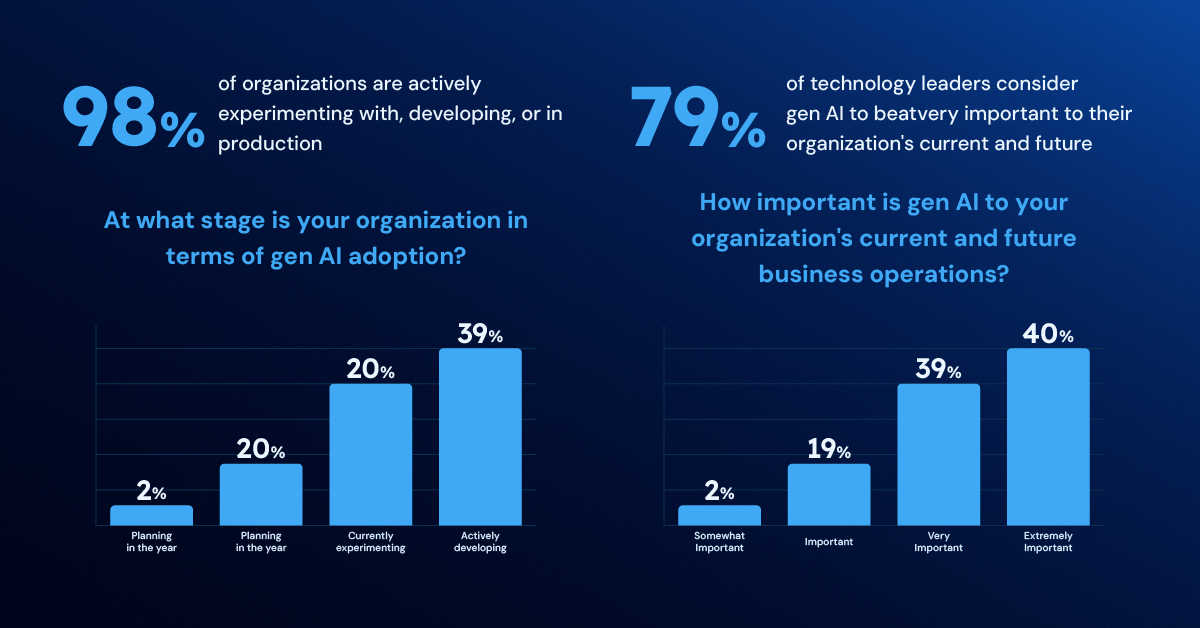
A recent Google Cloud State of AI Infrastructure report underscores that this AI momentum is real: 98% of organizations are actively exploring AI, and 39% already have generative AI in production . Yet the same report delivers a sobering message: many companies are not truly prepared to support AI at scale. The missing piece isn’t a fancy algorithm or a bigger budget, it’s a strong data foundation. Before AI can soar, businesses must invest in the unglamorous but critical groundwork of data quality, data storage, and data governance.
The message is clear: before you expand AI across your organization, you need to make sure your data platform is prepared. That means addressing three key areas: data quality, storage, and governance. Without these in place, even well-funded AI initiatives are likely to underperform.
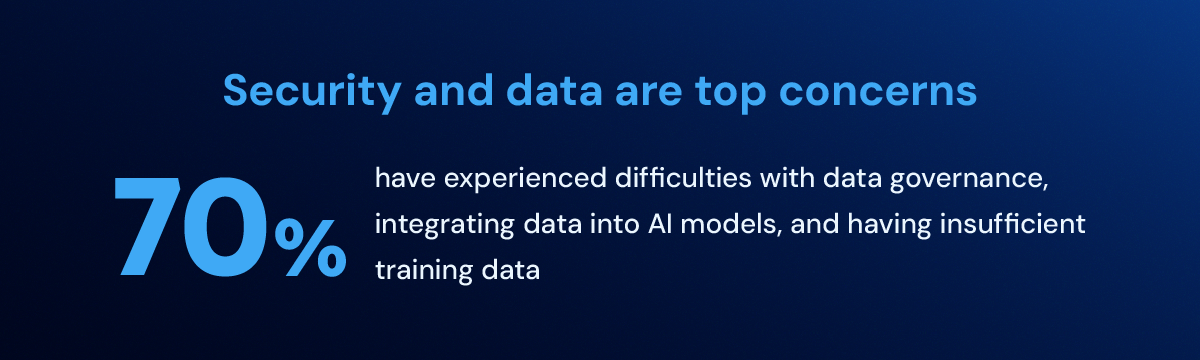
The majority of AI projects rely heavily on historical and real-time data. But 70% of organizations report hitting roadblocks due to poor data quality, fragmented sources, or missing data. These problems don’t just slow down development, they compromise the output of AI models and erode trust in the results.
Poor data quality can take many forms: duplicated records, inconsistent formats, outdated entries, and missing values. When training data contains these issues, AI models tend to behave unpredictably or deliver misleading insights. That can lead to flawed decisions and wasted investment.
Organizations that allocate resources to cleaning and validating their data before training models tend to see better results. In fact, the report highlights that companies that invest significantly in data preparation are more than twice as likely to see successful outcomes from their AI initiatives. In short, high-quality data isn’t a technical nice-to-have, it directly influences whether your AI is effective or not.
As AI models become more complex and datasets grow, traditional data storage systems often become a limiting factor. Without the right infrastructure in place, it becomes difficult to support large-scale AI training, experimentation, and deployment.
According to the report, scalable and unified data platforms are a common feature among companies seeing success with AI. These systems are designed to support structured, semi-structured, and unstructured data at scale, and they integrate data from multiple environments—cloud, on-prem, and hybrid.
Storage architecture should support not just the size of the data but the speed and flexibility needed to process and retrieve it. Legacy systems and data silos slow things down and create reliability issues. In contrast, modern platforms enable clean data flow, support lineage tracking, and reduce friction across teams working on different aspects of the AI stack.
This is especially important when multiple departments are contributing to, or consuming, AI-driven outputs. A fragmented infrastructure makes collaboration slower and models less effective.
Data governance is becoming one of the most cited concerns for companies moving into AI. The Google report shows that security and privacy challenges are top reasons why many organizations either delay or scale back their AI deployments.
There’s a good reason for that. AI systems often rely on sensitive or regulated data, and as these models become more integrated into decision-making, the consequences of misuse or errors grow. That includes everything from biased results to breaches of privacy regulations.
Governance frameworks help organizations define how data is collected, accessed, used, and retained. They also ensure that appropriate safeguards are in place to meet compliance requirements and internal standards. Organizations that have clear governance policies in place are more likely to avoid reputational risk, ensure model reliability, and move faster when it comes to deploying new AI use cases.
A large share of early AI failures can be traced back not to issues with the models themselves, but with how the underlying data was managed. That includes poor documentation, unclear ownership, and lack of version control. These are avoidable issues, but only if governance is made a priority from the start.
The Real Starting Point for AI
The Google Cloud report sends a strong signal to business leaders: AI requires a mature data foundation. Most organizations are under pressure to adopt AI quickly, but moving forward without addressing basic data readiness often leads to disappointing results or stalled projects.
Instead of rushing to implement AI features, leaders should take a close look at their current data platform. Are datasets consistent and reliable? Can infrastructure support increased workloads and collaboration? Are security and governance controls strong enough to support sensitive use cases?
The companies that are succeeding with AI today aren’t necessarily the ones with the largest teams or the most advanced models—they’re the ones that invested early in getting their data in order. That step may not feel like innovation, but it’s often the difference between initiatives that scale and those that never get past a pilot phase.
If your organization is serious about using AI as a competitive tool, the first investment shouldn’t be in AI itself. It should be in the data platform that supports it.